
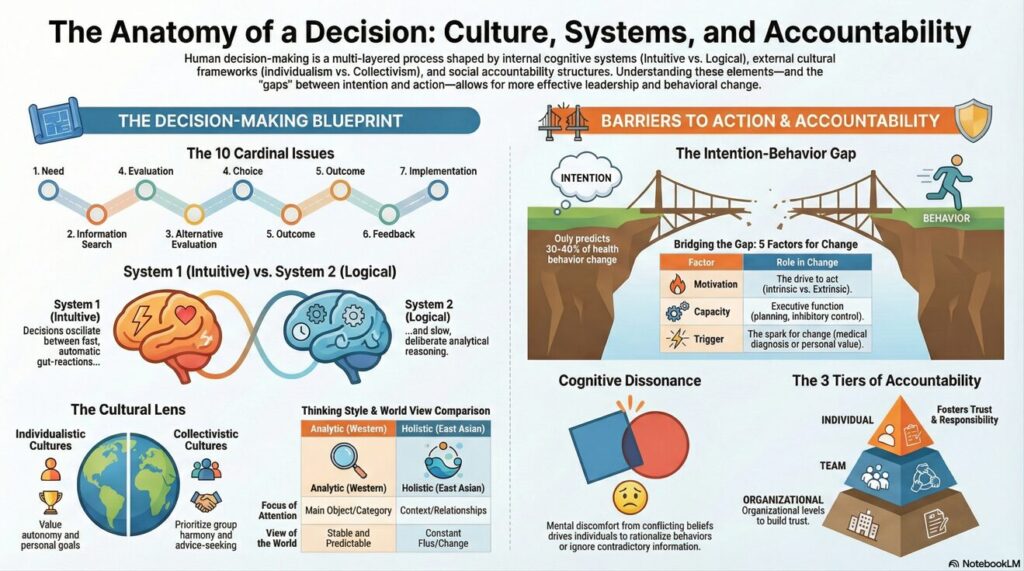
Every day, we navigate a dazzling maze of choices, guided by two very different “thinkers” in our minds. One is fast, emotional, and instinctive. It relies on ancient mental shortcuts that once helped us dodge predators and that now nudge us toward familiar comforts. The other is slower, deliberate, and logical. It uses significant mental effort to plan for the future or solve complex problems. These two systems constantly interact, shaping our daily decisions into a blend of instinct and reason.
Even when our logical mind creates a thoughtful plan, we often fall into what scientists call the “intention-action gap.” We may sincerely promise ourselves that we will exercise every day, only to end up on the couch with a plate of holiday cookies and a movie. When our actions conflict with our beliefs, we feel an uncomfortable tension known as cognitive dissonance. To reduce this discomfort, our minds quickly create rationalizations. We might tell ourselves that the sugary treat is a well-earned reward for getting through a long day.
Our choices can also leave behind the lingering feeling of regret, that quiet question of how a different path might have unfolded. Interestingly, we often regret the chances we never took more than the mistakes we actually made, because the paths not chosen remain idealized in our imagination. Still, every decision we make, whether careful or impulsive, helps shape who we become. Over time, our choices influence not only our own lives but also the broader world around us.
References:
- Dual Process Theory (System 1 & System 2): Dual Process Theory: A Simple Summary and The Psychology of Decision Making: Science-Based Strategies.
- The Intention-Action Gap: Intention-Action Gap – The Decision Lab and Why We Don’t “Just Do It”: Understanding the Intention-Behavior Gap in Lifestyle Medicine.
- Cognitive Dissonance: Understanding Cognitive Dissonance: Causes and Solutions.
- Regret: What We Regret Most … and Why and Why People Regret Decisions They Think About the Longest.
- Character and Habits: The Architecture of Character: Aristotle’s Virtue Ethics and Modern Habit Formation and Chapter 4: Virtue Ethics—The Role of Character in Moral Philosophy.
- Ripple Effects of Choices: Interpersonal Influence Ripple Effect and Societal Ripple Effects.