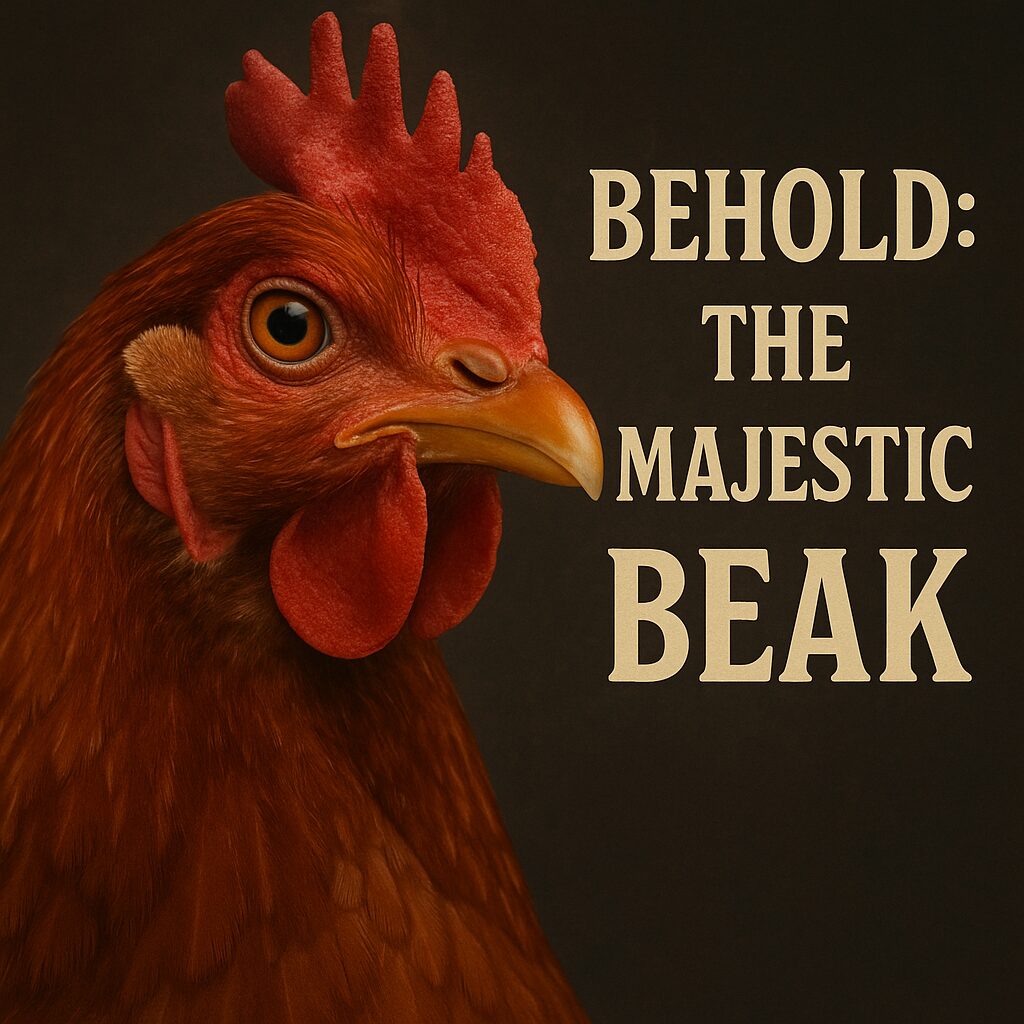
If you’ve ever locked eyes with a chicken for just a bit too long (no judgment, this is a safe space), you’ve probably noticed its beak is basically nature’s tiny Swiss Army knife that is great for pecking, preening, and committing low-level barnyard mischief. But to an AI, that fabulous beak isn’t a beak at all. Nope. It’s just edges. Lots of edges. Not the “I only drink cold brew from a mason jar” kind of edgy, just the kind where the color or brightness suddenly changes and the computer goes, “Oooh, spicy boundary detected.”
So how does AI actually see a beak? Picture it scanning an image pixel by pixel like a tiny, caffeinated librarian checking every single book in the world back into the system. When it finds a sudden color jump, bam! That’s an edge. Then it plays connect-the-dots until the edges form a shape: triangles, curves, mysterious geometric chicken geometry. Eventually the AI squints at its digital doodle and declares, “Yes. There it is. The Majestic Beak.” Instead of just a blob of reds and yellows, it recognizes that dramatic triangle that proudly says, “This is the pointy end. It means business.”
And here’s the twist: chickens do not make this easy. Their feathers blur, their heads whip around like they heard gossip, and their beaks come in all kinds of fabulous styles. Yet with edge detection, the AI can keep up, tracking that beak as it wiggles, waggles, and aggressively investigates anything that might be edible. Edge detection gives AI the superpower to follow the beak through the pure chaos of the coop, making sure our feathery diva stays famous in every single frame.
So the next time you see a chicken strutting around like it owns the joint, just remember: this is how we do it.
Let’s do the FunkAI ChAIcken!
Reference: AI: What Could Go Wrong? with Geoffrey Hinton | The Weekly Show with Jon Stewart