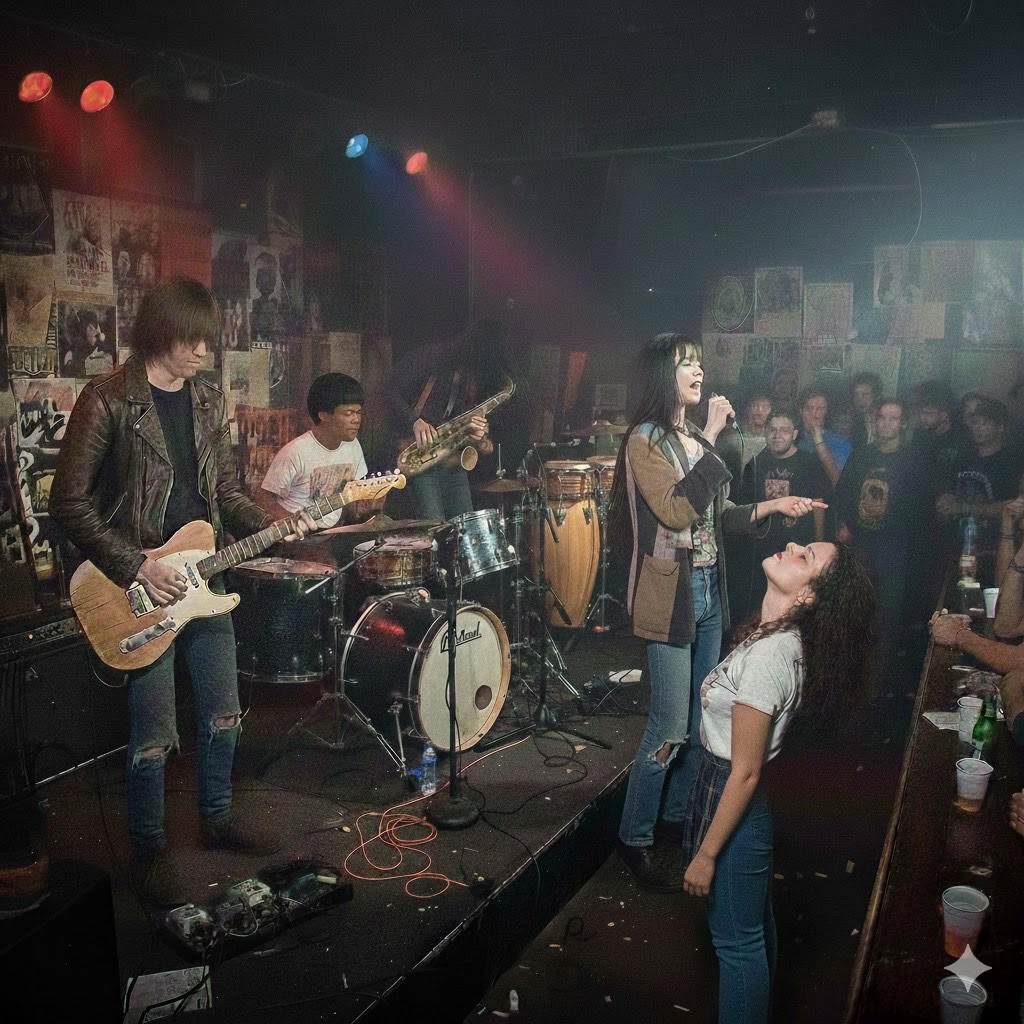
TONka didn’t try to be ignored. It just sort of happened.
In the early-’90s, in the Wicker Park neighborhood of Chicago, Illinois, the streets smelled of damp concrete, unbridled ambition. and a hint of urine. North Avenue was a border, Ashland Avenue was the challenge and the neighborhood signage warned “No Prostitution”.
TONka rehearsed in a low-ceilinged, damp, basement with the aroma of electricity and incense (lol).The rusty pipes and cheap dry wall reveled in the chaos.
TONka started with two childhood friends from the South Side. They were drummers together in rhythms both precise and catastrophic. After one moved to San Francisco, the band was left with a single new replacement stepping in with quiet confidence and eventually marrying the poet who was the lead singer.
TONka was named after the tonka tree much adored by the poet who was the lead singer. Legend is that she loved the tree’s stubbornness, rarity, and fragrance. Was it a signal that the band would resist understanding, and also a promise they would carve their own crooked path?
TONka had sound committed to jazz mentalism infused with punk velocity. The saxaphone screamed and wailed while the guitar cut across it all, jagged and relentless, and the drummer(s) pushed forward like a runaway train. Above it all was the poet who was the lead singer, an angel soaring above the chaos with ethereal melodies and wisdom. A bassist appeared briefly, competent but larcenous. There was even a clarinet player at one point, just because it was Wicker Park in the early ’90s.
TONka played all the clubs that would have them. The Czar Bar had sticky floors and nodding heads and was smoky and distant. The Gallery Cabaret was more suitable as the band’s artistry outshone any polite interest.
TONka never played Lounge Ax, although the guitarist and saxophonist collaborated with Carnivale de Carnitas for a single memorable set. The saxophonist swapped his horn for a distorted autoharp and wailed jazz-punk machinery gone wild. The crowd, such as it was, and as pleased as could be expected, enjoyed the results of this obscure opening band.
TONka appeared live on WHPK, the University of Chicago radio station. Late-night listeners may have caught the songs through cheap speakers, dorm rooms, and kitchen appliances. Perhaps for a brief moment somewhere, someone understood.
TONka recorded their epic pop. in that basement a stones throw from North and Ashland with cheap mics, buzzing boards, and borrowed reel-to-reel gear. One afternoon, everything was gone. No locks broken but everything stolen. Luckily they still had the digital masters.
Something had shifted. Songs shrank, fights ended quickly, rents rose, clubs changed, and people just burned out. There was an official breakup but it was anticlimactic. The basement was already filled with someone else’s junk.
If you are lucky, you can still hear the whispers, “Remember TONka?” and someone might nod, unsure why it mattered.
TONka – pop.
The Boy Loved the Devil
Temperance
Discursion / Wilma + Me
Freely
Evol Lived
TONka – Live at the Gallery
summer
no strings/squeak/yr slodi
good bye
TONka – For Sale or Rent
Opening
Listen to the music and decide for yourself what was real.
This has been another totalAI true legend brought to you by FrikkinAI.com
This site depends on contributions by people like you and your contributing agents and all the contributors that contribute to contributed content.
We couldn’t do it without you!